Withiel
Egloswydhyel — “a wooded place”
A quiet parish tucked just north of Cornwall’s geographic heart, carrying eight thousand years of history in its field names, its ancient granite church, its beloved flower festival, and the pilgrims’ path that still crosses its land.
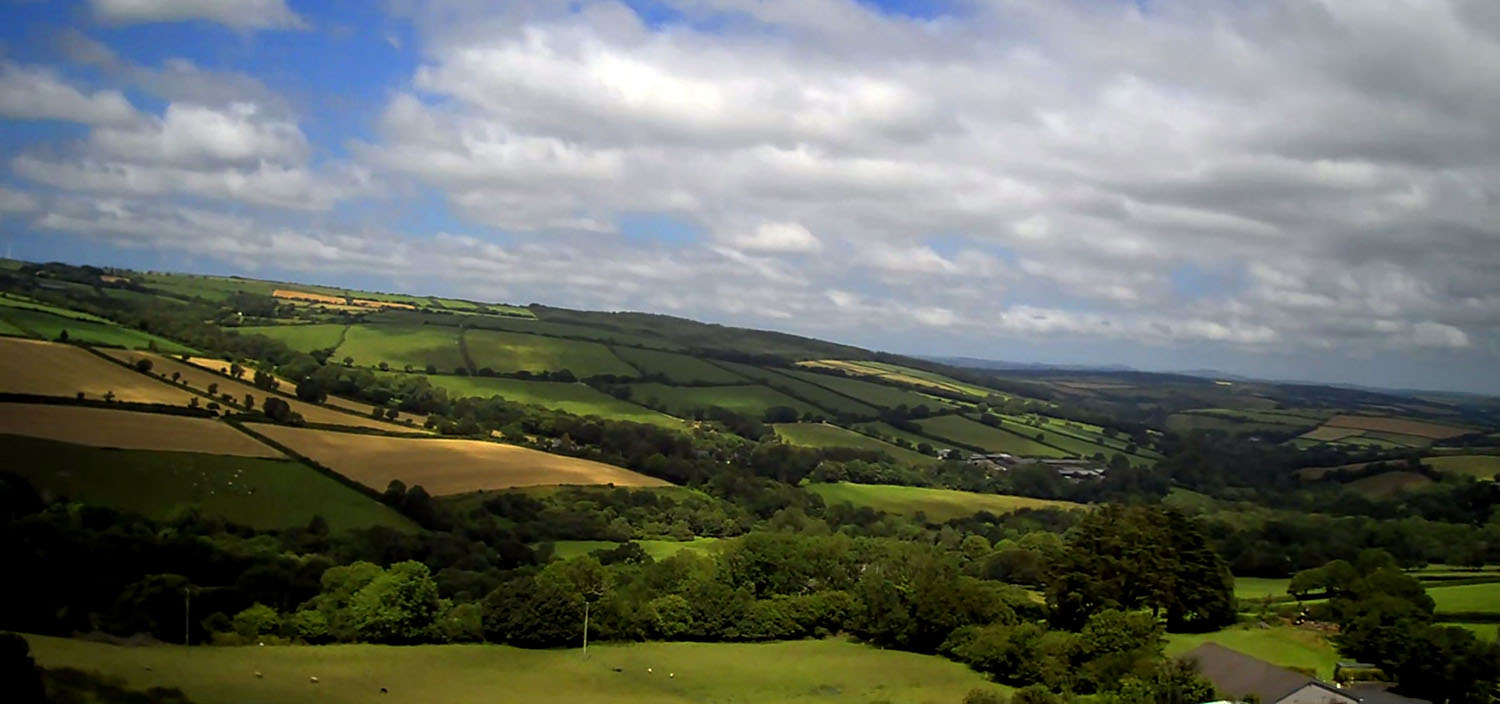
A Microcosm of Cornish History
The Parish of Withiel lies just to the north of the geographic centre of Cornwall, providing a remarkable window into the full sweep of Cornish history — from the Bronze Age through medieval Celtic Cornwall, the industrial revolution and mining era, right through to the roots of the modern rural community seen today.
The name itself tells the story of the land. Withiel derives from the Cornish Gwydhyel — “a wooded place.” The inhabitants of Withiel appear to have continued speaking Cornish long after Bodmin had switched to English, and there are over 50 historic Cornish place names within the parish.
Field names such as Gears Wood, Gears Hill and Kerriers carry the Celtic element “Gear/Ker” meaning fort or settlement. The Domesday Survey of 1086 recorded the manor as “Berneves,” and for centuries before and after the Norman Conquest the church and manor belonged to the Monastery of Bodmin — a connection lasting until the dissolution of 1538.
The inhabitants of Withiel seem to have continued to use Cornish long after Bodmin succumbed to the use of English.
— Withiel Parish CouncilHeritage Highlights
Cornish Crosses
Two ancient Cornish crosses survive in the parish. Inches Cross stands at a road junction south of the village; another was relocated to the rectory garden around 1860.
Victorian Post Boxes
Three wall post boxes survive in the parish — two dating to George V at Retire and Withiel Churchtown, and a Victorian-era box at Bosnieves Cross Roads.
Cast Iron Finger Posts
Six historic cast iron finger posts stand at crossroads, re-armed in 2018 with the help of the St Breock Wind Farm Community Fund and cast by Irons Brothers of Wadebridge.
Mulberry Mine
Dating back to Roman times, Mulberry Mine was one of only three tin-producing mines in the county. The opencast pit reached 100 feet deep and 700 feet long.
St Gundred’s Holy Well
A pilgrimage destination into the 1930s, visited on Holy Thursday before sunrise. The well was believed to cure eye diseases when a pin was offered to the saint.
The Snail Creep Dance
A unique local folk tradition: hundreds of couples spiral inward and outward following a band in a great living coil — held at Tea Treat events to raise money for community causes.
St Clement’s Church
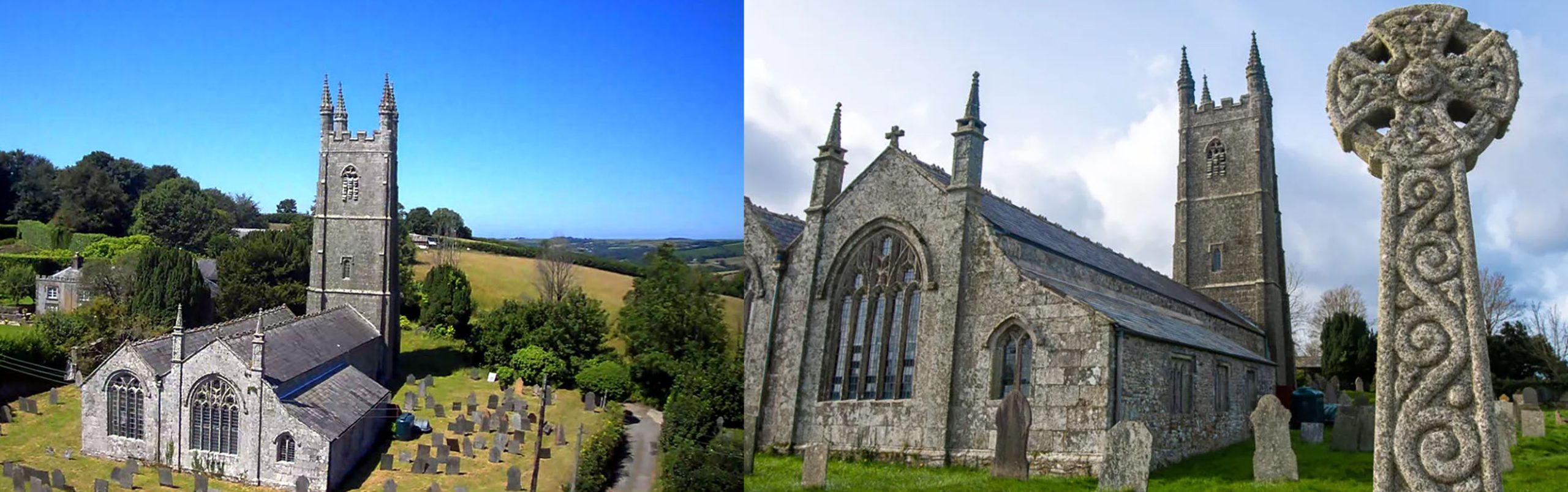
St Clement’s Church is a Grade I listed building that has stood at the heart of Withiel since the 13th century. The nave and chancel date largely from the 14th century, with substantial additions in the 15th and early 16th centuries — a granite tower, a spacious south aisle, and a smaller north aisle used as a private chapel by the Bevilles of Brynn Manor.
The late medieval font, dating to 1478, bears the anchor of St Clement — the earliest recorded reference to the church’s dedication, possibly associated with a prior cleric who had served at St Clement Danes. Fragments of 15th-century stained glass survive in the east window of the south aisle, including the arms of Prior Vivian of Bodmin, who served as rector here from 1523 to 1533.
By the early 19th century the church had fallen into disrepair, and a major restoration was undertaken in 1819–1820 at the sole expense of Sir Vyell Vyvyan of Trelowarren. The Vyvyan family held the rectory for generations, collectively serving the parish for half a century. Members of the Vyvyan family, including the Rev. Sir Vyell Donnithorne Vyvyan, 9th Baronet, shaped parish life for much of the Victorian era.
The church recently benefited from a new roof — a testament to the fundraising dedication of the local community. It is also one of twelve official stamping churches on the Saints’ Way pilgrimage passport, welcoming walkers travelling from Padstow to Fowey.
Interior Features
- ✾ Late medieval font with anchor of St Clement (1478)
- ✾ Angel holy water stoup in the porch
- ✾ 15th-century stained glass in south aisle east window
- ✾ Arms of Prior Vivian of Bodmin in east window
- ✾ Charming early 19th-century baptism board
- ✾ North aisle floor paved with early 19th-century headstones
- ✾ Memorial tablets to the Vyvyan family
- ✾ Raised, curved churchyard suggesting pre-medieval origins
Saints Way Pilgrim Passport St Clement’s is one of 12 stamping churches on the Truro Diocese Saints’ Way passport. Pilgrims walking from Padstow to Fowey are welcome to stop and collect their stamp here, as on the Camino de Santiago.
The Withiel Flower & Art Festival
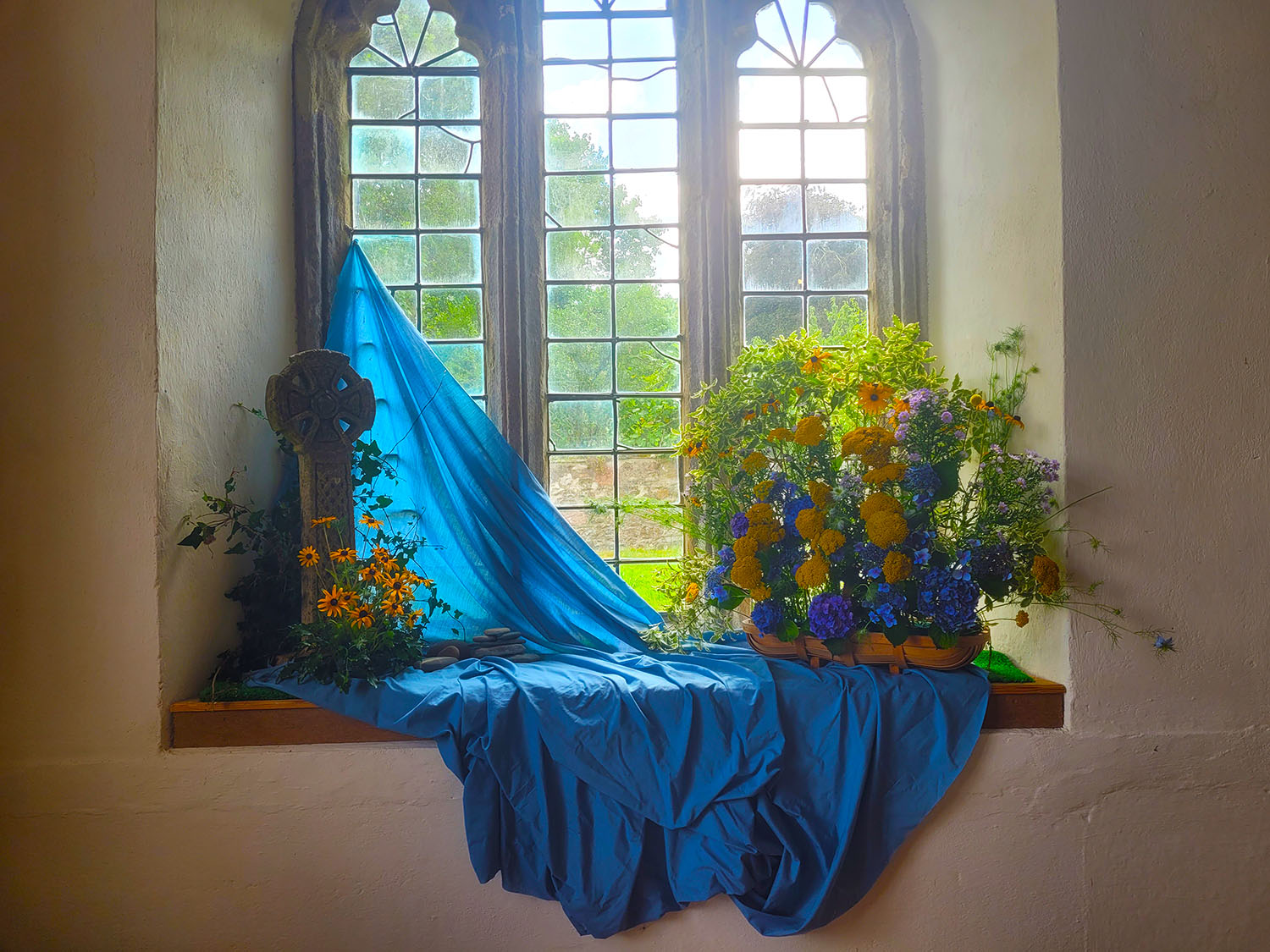
The Withiel Flower and Art Festival is one of the most cherished events in the parish calendar — a biannual celebration that has been running since the 1980s and serves as the church’s principal fundraiser. Held at St Clement’s Church and the village hall over a long bank holiday weekend, the festival transforms the ancient granite church into a breathtaking garden of living colour.
Each festival is built around a theme. Twenty-eight individual floral arrangements are created by local community groups, professional flower arrangers, and enthusiasts, each one interpreting the theme in its own way. Past themes have drawn in contributions from the village pantomime group, the craft group, and dozens of local volunteers — depicting subjects as diverse as birdwatching, woodworking, astronomy, and amateur dramatics.
The festival runs daily from 10am to 5pm, with organ music playing through the church, art demonstrations taking place, and an exhibition of work by local artists, potters and sculptors set up in the village hall next door. Refreshments, lunches and the quintessentially Cornish cream tea are served throughout.
The 2026 festival takes place over the Whitsun Bank Holiday, 23rd–25th May, with admission at £5. The website for full details and updates is withielflowerfestival.co.uk
Withiel Flower & Art Festival 2026
23rd–25th May 2026 · Whitsun Bank Holiday Weekend
A Tradition Since the 1980s
The Withiel Flower Festival has been a biannual event since the 1980s and is the church’s main fundraiser. What began as a local celebration of flowers has grown into a festival that draws visitors from across Cornwall and beyond, while remaining rooted in the spirit and community of this small parish.
Withiel Village Hall
The village hall at Saints View is the living heart of Withiel’s community life — the place where the parish gathers for everything from pantomimes to parish council meetings. Sitting alongside the children’s play area and sports field, it forms a true community campus for all ages.
Over the course of the year, the hall hosts a wide range of activities. The Women’s Institute meets here on the first Friday of each month. During the Flower and Art Festival, the hall is transformed into a gallery showcasing the work of local artists, potters and sculptors. The Withiel Parish Council holds its regular monthly meetings here, and the hall is available for hire for private functions, classes and events.
Community traditions bring the village together throughout the year — the popular summer barbecue and duck race at Whitehay, an annual cricket match open to all, and the hugely popular winter pantomime that the hall is perhaps most famous for. These events reflect a community spirit that Withiel is rightly known for.
For bookings: secretary@withielvillagehall.co.uk · Saints View, Withiel, Bodmin, PL30 5NN
Annual Pantomime
A winter highlight drawing audiences from across the parish — the village hall pantomime is one of Withiel’s most cherished traditions.
Summer Duck Race & BBQ
Held at Whitehay each summer, the duck race and barbecue bring the whole community together in celebration.
Annual Cricket Match
An inclusive neighbourhood match open to all — no club membership required, just a love of the game and the Cornish countryside.
Women’s Institute
Withiel WI meets on the first Friday of each month at 7:15pm in the village hall.
The Saints’ Way at Withiel
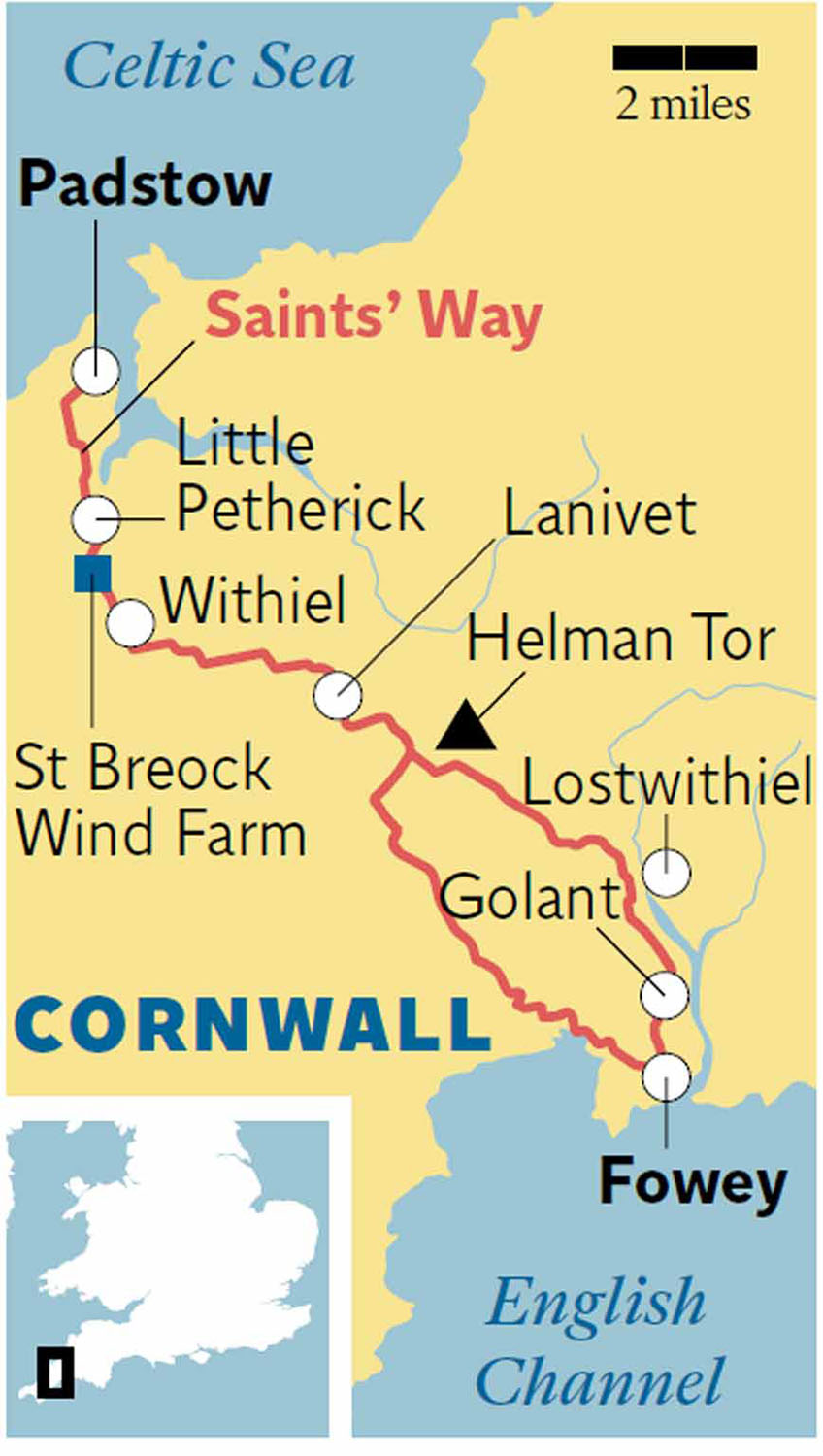
The Saints’ Way — Forth an Syns in Cornish — is a 27-mile long-distance footpath linking Padstow on the north coast with Fowey on the south, passing through twelve parishes and carrying walkers through the very heart of Cornwall. Withiel sits at stage four of the route, and St Clement’s Church is one of twelve official stamping churches on the pilgrims’ passport.
The route was formally rediscovered in 1984, when local ramblers found a series of forgotten granite stiles near Luxulyan — the thread of an ancient path used by Celtic traders, missionaries and pilgrims crossing the peninsula to avoid the treacherous seas around Land’s End. The Truro Diocese now issues a Saints’ Way passport, which can be stamped in each church along the way — just as on the Camino de Santiago.
Stage four enters Withiel parish from Higher Tregustick, descends through fields and a track to the River Ruthern, crosses on twin footbridges, then climbs through Blackhay Farm and its wooded hillside to arrive at Withiel Churchtown. The Ruthern valley crossing is widely regarded as among the most beautiful moments of the entire walk — a wooded water meadow alive with wildflowers, birdsong and, if you’re lucky, the glimpse of an otter.
The Route
- Stage 4 of the route (3.5 miles / 5.6 km) passes through the entire parish
- The Ruthern valley crossing is one of the most scenic sections of the walk
- School groups from 22 schools across Cornwall walk the Saints’ Way together
- Pilgrims’ passports are available from St Clement’s Church
- Total walk: 27 miles, approximately 12–13 hours
A Centralised Location
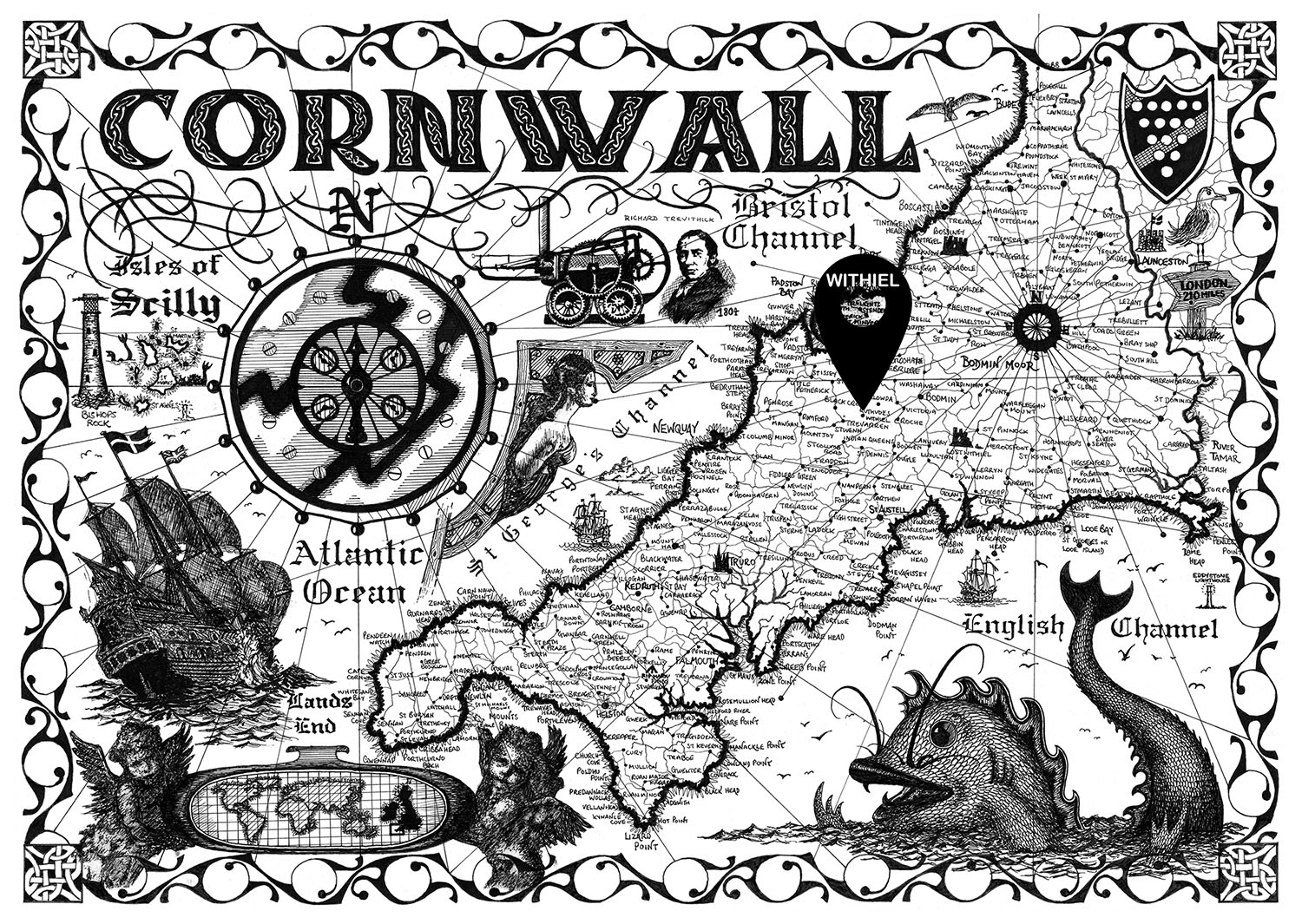
Withiel occupies a quietly strategic position in the Cornish landscape — just north of the geographic centre of Cornwall. This central position has given the parish a unique character, touched by the history of the whole peninsula rather than the particular character of coast or moor.
The village sits approximately six miles from Bodmin and seven miles from Wadebridge, making both towns readily accessible for schools, shops, supermarkets and services. The A30 — Cornwall’s primary artery — is close by, approached from Victoria (Cornwall Services). Despite this connectivity, Withiel is reached by a network of narrow Cornish lanes that have kept it perfectly, peacefully unspoilt.
The River Ruthern rises near Victoria in the parish of Roche and flows northward through Withiel before joining the River Camel. Its valley is a Site of Special Scientific Interest, sheltering otters and rare flora in wooded water meadows — the same beautiful corridor the Saints’ Way follows on its crossing of the parish. The wider parish covers 3,093 acres on the southern slope of the Ruthern River valley, encompassing the hamlets of Withielgoose, Retire, Tregawne, and the village of Ruthernbridge.
Withiel sits near the geographic centre of Cornwall, the Saints’ Way crossing the parish from north to south
Living in Withiel
Withiel is a deeply rural community whose character is shaped by the rhythms of farming, the church calendar, and community life. The parish encompasses the hamlets of Withielgoose, Retire and Tregawne, as well as the village of Ruthernbridge with its medieval bridge. Wadebridge and Bodmin are both close for all practical needs, while the village itself remains peacefully, beautifully unspoilt.
Agriculture & Farming
The parish economy is rooted in agriculture. Historic farms including Blackhay Farm, Tregustick Farm and Higher Brynn Farm continue to work the land as they have for generations across Withiel’s 3,093 acres.
Kerriers Solar Park
A notable feature of the modern parish landscape, providing renewable energy while Withiel’s rural character and heritage remain unchanged.
Ruthernbridge
The hamlet centres on a medieval bridge with two pointed arches over the River Ruthern. Its 1879 Wesleyan Chapel and coach house are both Grade II listed buildings. Until 1933 it was the terminus of the Bodmin and Wadebridge Railway branch line.
Walking & Wildlife
Beyond the Saints’ Way, the Ruthern valley is a Site of Special Scientific Interest, with wooded water meadows sheltering otters and rare flora. Ancient tracks and footpaths cross the parish in every direction.
Parish Council
Withiel Parish Council comprises seven elected councillors and a clerk, meeting monthly at the village hall. Most strategic functions are administered by Cornwall Council.
Getting Here
From the A30, exit at Victoria (Cornwall Services) and follow signs for Ruthernbridge and Withiel. Roche Railway Station on the Atlantic Coast Line is approximately 2.5 miles south of the village.